
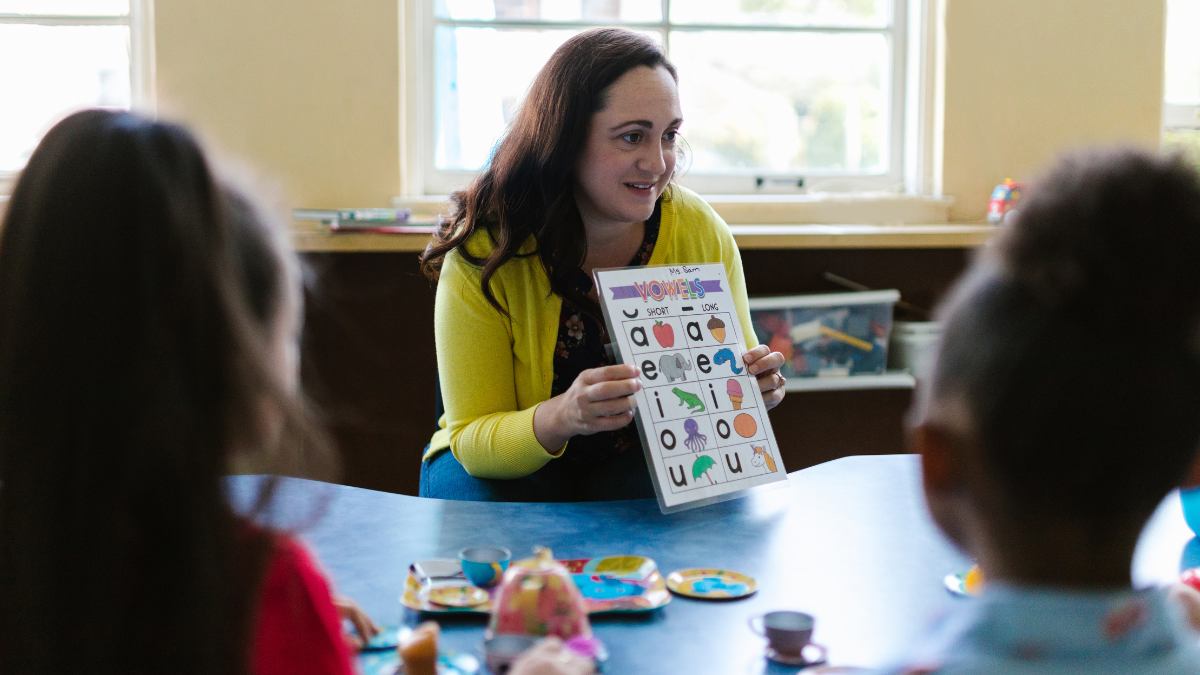
Beyond ABC: Early childhood educators know that learning to read begins long before a child opens their first book. At the heart of early literacy lies phonemic awareness – the ability to hear, identify, and manipulate individual sounds in spoken words. This essential skill serves as the cornerstone for reading success, but teaching it doesn’t have to mean endless drills and worksheets.
The Foundation of Reading Success
Think of phonemic awareness as the secret code that unlocks reading. Before children can connect letters to sounds, they need to understand that words are made up of individual sounds that can be broken apart and put back together. Research consistently shows that strong phonemic awareness skills in kindergarten are one of the best predictors of reading success in later grades.
Playful Approaches to Sound Recognition
Transform your classroom into a sound laboratory with these engaging activities:
- Sound Detective: Students walk around the room with pretend magnifying glasses, finding objects that begin with the target sound
- Sound Sorting Picnic: Bring in toy food items or pictures and have children sort them by beginning sounds
- Mystery Bag: Fill a bag with small objects and have children pull them out, stretching out each word’s sounds
- Sound Switch: Take familiar songs and change the beginning sounds of key words (e.g., “Twinkle Twinkle Little Star” becomes “Pinkle Pinkle Pittle Par”)
Moving and Grooving with Sound Blending
Get those bodies moving while developing phonemic awareness:
- Sound Jump: Place large paper “lily pads” on the floor. Children jump from pad to pad, making each sound in a word, then jump them all together quickly to blend
- Robot Talk Dance: Students move like robots while saying words sound-by-sound, then “transform” into humans while blending the sounds together
- Sound Band: Assign different sounds to different movements (clap, stomp, snap) and perform word symphonies together
Digital Tools That Work
While hands-on learning is crucial, technology can provide valuable reinforcement:
- Phonemic Awareness Apps:
- Phonics Hero
- Teach Your Monster to Read
- Starfall ABCs
- Interactive Whiteboard Activities:
- Sound sorting games
- Digital sound boxes
- Recording features for self-assessment
Family Connection: Take-Home Activities
Empower parents to support phonemic awareness at home:
- Sound Scavenger Hunt: Provide a weekly sound for families to hunt for at home
- Car Ride Games: Share simple sound games for travel time
- Kitchen Sound Sorting: Encourage sorting grocery items by sounds
- Bedtime Sound Stories: Teach parents to play with sounds during story time
Assessment Made Simple
Track progress without losing the fun:
- Observation Checklists: Create simple checklists for different phonemic awareness skills
- Recording Sheets: Track student progress during regular classroom activities
- Game-Based Assessment: Use familiar games to assess specific skills
- Digital Portfolios: Record students demonstrating different skills
Common Challenges and Solutions
Challenge: Students struggling to hear individual sounds Solution: Use physical movements to represent sounds, making them more concrete
Challenge: Maintaining engagement during practice Solution: Rotate through different games frequently, letting students choose favorites
Challenge: Different skill levels in the same class Solution: Use flexible grouping and differentiated games that can be modified for difficulty
Tips for Success
- Make it playful – children learn best through play
- Use multi-sensory approaches
- Keep activities brief and high-energy
- Celebrate progress, no matter how small
- Build on what children know
- Include movement whenever possible
Remember, your enthusiasm is contagious! When you make phonemic awareness activities fun and engaging, you’re not just teaching essential skills – you’re nurturing a love of language that will last a lifetime.
Focused practice, playful approach, and consistent reinforcement create the perfect formula for phonemic awareness success. Start with these activities and watch your young learners flourish!