
The CSAS Blog
Written by educators. For educators.
Science of reading, MTSS, leadership, and special education insights from Dr. Chandra Williams and the CSAS team: the same thinking our partner schools get, published for everyone. Learn, grow, and take your system to the next level.
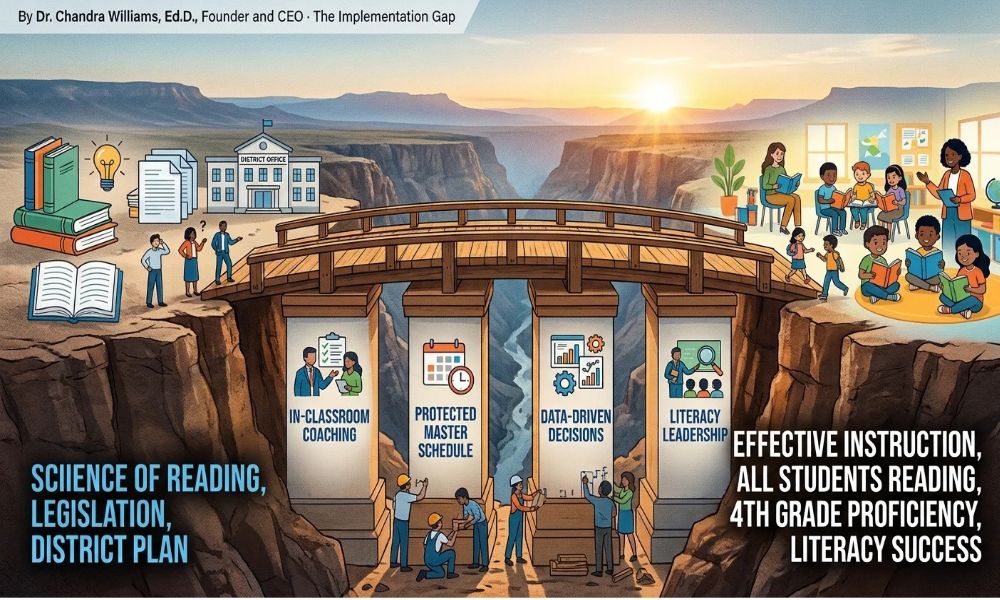
What Is the Implementation Gap in Literacy? (And Why Your Curriculum Is Not the Problem)
July 9, 2026 · 7 minute read The short answer: The implementation gap in literacy is the distance between the reading plan a district adopts and the instruction students actually receive. It is why the science of reading can be settled, legislated, and funded while...
Browse the Library
Find the exact article your week needs.

Combatting the Summer Slide: Essential Strategies for Teachers and Parents
As the school year draws to a close, teachers and parents alike turn their attention to a common educational challenge: the summer slide. This term refers to the tendency for students...

Targeted Fluency Instruction by Grade Level
Reading fluency is vital for literacy development and varies as students advance from kindergarten through fifth grade. Each grade level presents unique challenges and milestones in...

Boosting Reading Fluency with Effective Practices
Reading fluency is a critical skill for young learners, serving as the bridge between recognizing words and understanding their meaning. Fluent readers can read smoothly, quickly, and...

Harnessing the Power of Visual Literacy in the Classroom
In today's multimedia age, visual literacy is becoming increasingly important. In educational settings, visual literacy refers to the ability to understand, interpret, and evaluate...

Transitioning to Summer: Tips for Teachers
As the school year winds down, teachers face the dual challenge of closing out the current year effectively while also preparing their students for a productive summer. This...

LETRS and Orton-Gillingham Training
Comprehensive Guide for Teaching Reading: Teaching reading effectively requires understanding both the theory and application of literacy instruction. Two prominent training...

The Science of Reading and Structured Approaches
Building on our understanding of how the brain learns to read, part two of our discussion delves deeper into the science of reading. This article explores structured literacy...

How the Brain Learns to Read
Insights and Applications for Educators: Learning to read is one of the most critical skills acquired in the early stages of education. It not only serves as the foundation for...

Enhancing Literacy Instruction: PD and Coaching Support
In an era where educational demands and literacy expectations continue to evolve, the continuous professional growth of teachers remains paramount. For school principals, investing in...

Empowering Struggling Readers: Instructional Strategies (Part 2)
Building on the foundational strategies for supporting struggling readers with the science of reading, this second part offers specific instructional strategies tailored to students...

Specialized Instruction and the Science of Reading
Addressing Struggling Readers in Grades 3-5: The journey to becoming a proficient reader is unique for every child, with some facing more challenges than others. Struggling readers,...

Advancing Reading Fluency: Strategies for Grades 3-5
As students progress to grades 3-5, the emphasis in reading instruction shifts towards more advanced fluency skills that support deeper comprehension and the transition to more...
Never Miss a Post
The Click One idea a month that moves reading scores.
Five minutes, no spam.