
The CSAS Blog
Written by educators. For educators.
Science of reading, MTSS, leadership, and special education insights from Dr. Chandra Williams and the CSAS team: the same thinking our partner schools get, published for everyone. Learn, grow, and take your system to the next level.
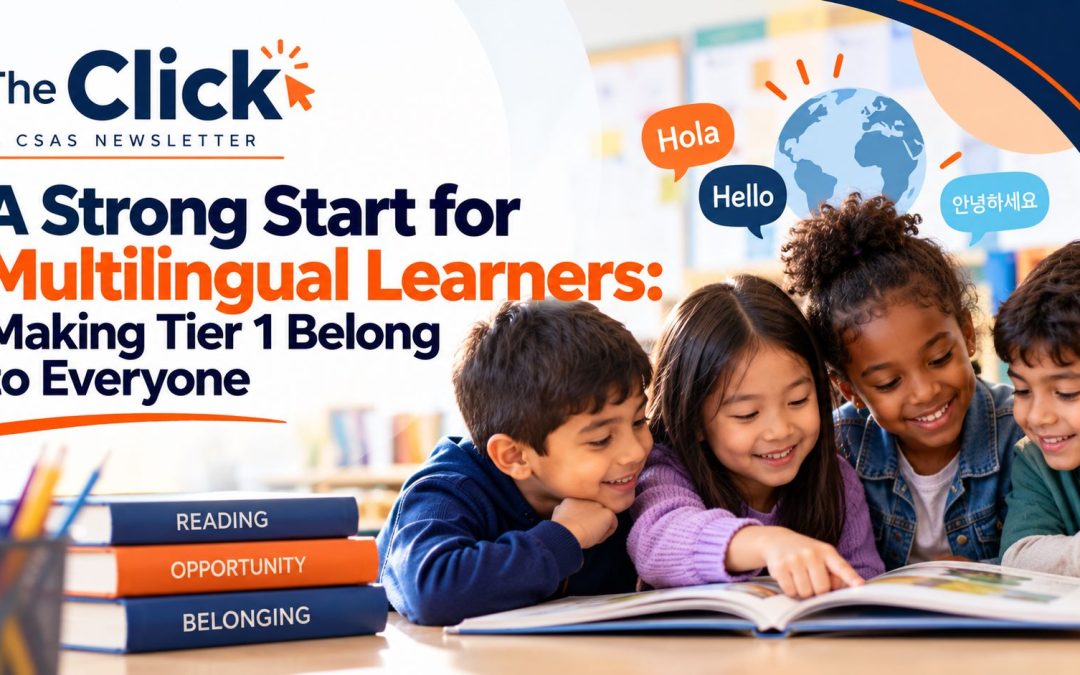
A Strong Start for Multilingual Learners: Making Tier 1 Belong to Everyone
The short answer: phonemic awareness for multilingual learners starts from an asset, not a deficit: these students arrive with a full sound system in at least one language, and much of it transfers. They do not need a different Tier 1; they need the strong one,...
Browse the Library
Find the exact article your week needs.

Phonics Isn’t Just for Primary Grades: Why Older Readers Still Need Explicit Phonics Instruction
It’s a myth that phonics is only for K–2. Struggling readers in grades 3–5 often lack decoding skills because they were never explicitly taught. That’s where structured phonics...

Closing the Gap: How to Accelerate Reading Growth in Grades 3–5
By grades 3–5, the stakes are high. Students who are not yet fluent readers are at risk for long-term academic challenges. But it’s not too late. With targeted support and structured...

How to Scaffold Instruction for K–2 English Learners Without Lowering the Bar
English learners in grades K–2 don’t need simpler work, they need scaffolded support to access the same rigorous instruction as their peers. The key? Aligning instruction to...

Setting Up a Structured Literacy Block in Kindergarten Through 2nd Grade
What makes a literacy block “structured”? It's not about rigid scripts, it’s about delivering systematic, explicit, and intentional instruction based on how children actually learn to...

Using Sound Walls to Build Phoneme-Grapheme Connections in K–2
Still using word walls with random sight words? It’s time to upgrade to a Sound Wall a Science of Reading-aligned tool that helps K–2 students connect speech to print. What Is a Sound...

Decodable Texts in K–2: The Bridge from Phonics to Reading Independence
Are your students guessing at words or truly decoding them? The answer lies in your use of decodable texts a must-have tool for beginning readers. What Are Decodable Texts? Decodable...

Why Kindergarten Isn’t Too Early for Phonemic Awareness Instruction
In Kindergarten, we’re not just teaching the alphabet—we're wiring the brain for reading. That’s why phonemic awareness instruction is essential, even in the first weeks of school....

What’s Your Literacy Block Missing? A Teacher’s Checklist for Effective Instruction
The strongest classrooms aren’t crammed with flashy materials, they’re grounded in structured routines that prioritize skills aligned to how the brain learns to read. The Must-Have...

Tier 2 Doesn’t Mean Tier 1 Is Over: How to Integrate Intervention into the Literacy Block
Too often, teachers see Tier 2 as something that happens outside the classroom—by someone else. But powerful intervention can (and should) happen within your literacy block, alongside...

Structured Literacy in Action: What It Looks Like in K–5 Classrooms
“Structured literacy” isn’t just a buzzword, it’s a blueprint for ensuring all students, including those with dyslexia, become proficient readers. But what does it actually look like...

Beyond Decoding: Building Reading Fluency in K–5 Classrooms
Once students can decode, they must learn to read with accuracy, automaticity, and expression. That’s fluency and without it, comprehension stalls. The good news? Fluency can be...

Why Phonemic Awareness Must Come First
Phonemic awareness is often misunderstood, underestimated—or worse, skipped. Yet research shows that without a strong grasp of phonemes, students struggle to decode words, spell...
Never Miss a Post
The Click One idea a month that moves reading scores.
Five minutes, no spam.