
By Dr. Chandra Williams, Ed.D., Founder and CEO · November 17, 2026 · 4 minute read
|
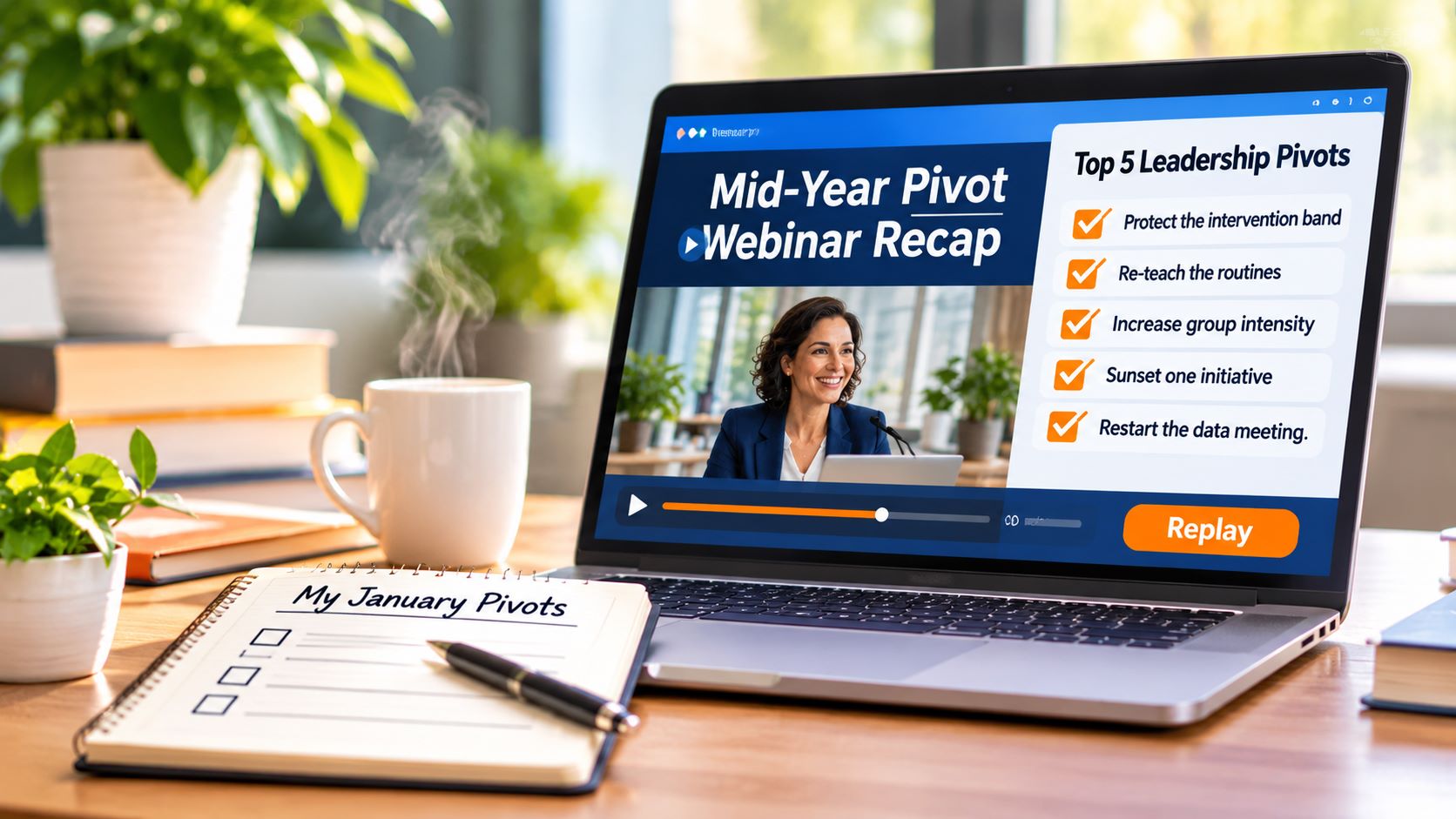
The short answer: the mid year pivot webinar recap in one paragraph: [N1] leaders joined us live on November 12 to run the four November questions and the Keep, Cut, Intensify framework on real examples. When we asked everyone to write one pivot they would execute in January, five commitments dominated the chat, listed below, and our live poll found [N2] percent of attendees had never formally sunset an initiative. The full replay and the worksheet are free below; the replay is the webinar, uncut, and the worksheet is the hour your leadership team runs next. |
Thank you to every leader who spent a November hour with us live, and to the teams who watched together from conference rooms, which we could tell from the chat and loved. What follows is the recap for everyone who asked for it and everyone who missed it: the five pivots leaders committed to most, the questions we answered on air, and the replay.
The five pivots leaders wrote down
1. Protect the intervention band in January.
[Confirm against chat log.] The most common commitment: re-fencing the supplemental intervention time that eroded through the fall, so support adds minutes again instead of borrowing them.
2. Re-teach the routines in the first week back.
[Confirm against chat log.] Treating January 4 like a mini first-ten-days: two days of deliberate routine resets that buy back the semester.
3. Move the stalled groups’ intensity, not their membership.
[Confirm against chat log.] For groups flat since October: smaller size, more minutes, tighter progress checks, before any conversation about different students.
4. Sunset one initiative, with thanks.
[Confirm against chat log.] The Cut column’s first graduate in many buildings: one named program or committee ending with dignity, its minutes reassigned in writing.
5. Restart the data meeting cadence before break.
[Confirm against chat log.] Getting the weekly meeting back on the calendar in December, so January’s first meeting applies rules instead of rebuilding habits.
What you asked on air
[Q&A 1: replace with a real question from the live session and the answer given.] [Q&A 2: replace with a real question and answer.] [Q&A 3: replace with a real question and answer.] The fuller versions of all three are in the replay, timestamped in the description.
|
The leaders who left with a plan did not leave with ten commitments. They left with one column of each. |
Run your own November read
Everything we taught lives in writing on this blog: the four November questions and the Keep, Cut, Intensify framework, and the worksheet from the session is inside the replay package below. Watch it with your leadership team, pause where we pause, and your January will execute what your November decided, which has been the whole point of this month’s series on closing the implementation gap.
FAQ
What were the most common mid-year pivots leaders chose?
Five dominated the live commitments: re-protecting the intervention band, re-teaching routines in the first week of January, intensifying stalled groups rather than reshuffling them, formally sunsetting one initiative with thanks, and restarting the weekly data meeting cadence before winter break.
Where can I watch the Mid-Year Pivot replay?
The full, uncut replay is free through the link in this post, delivered by email with the Keep, Cut, Intensify worksheet so leadership teams can watch together and run the exercise the same week.
What toolkit accompanies the webinar?
The Keep, Cut, Intensify worksheet from the live session, the four November questions in written form on this blog, and the Mid-Year Pivot Guide, together a complete one-hour exercise a leadership team can run without us.
Watch the full replay, free.The complete Mid-Year Pivot webinar plus the Keep-Cut-Intensify worksheet, delivered to your inbox so your whole team can watch together. |
About the author: Dr. Chandra Williams, Ed.D., is the founder and CEO of the Center for Student Achievement Solutions. A career educator who spent eight years as a school principal, she leads CSAS’s partnerships with schools and districts nationwide, including a multi-year Brooklyn partnership where all eleven partner schools improved for three consecutive years. Her team delivers structured literacy coaching, MTSS and reading intervention systems, and literacy leadership development, built on one conviction: educators do not need another vendor. They need a partner in the building.
Further Reading: Explore the What Works Clearinghouse for evidence-based education research. For more practical strategies, read our Keep, Cut, Intensify Framework and Mid-Year Pivot Guide.
References: Live session poll and chat data from the November 12, 2026 Mid-Year Pivot webinar (figures to be confirmed against the event exports before publication).